
A dedicated music room changes how much you actually play. Having to drag out an instrument, set up a stand, find your sheet music, and then pack everything away again afterward is a friction point that accumulates over time until playing starts to feel like more effort than it is worth. A permanent setup, even a modest one in a corner of a spare bedroom, removes that friction entirely.
The good news is that a home music room does not require professional acoustic treatment, custom cabinetry, or a dedicated soundproofed addition to your house. Most musicians playing at home need three things: enough space to play comfortably, somewhere to store their gear, and enough sound management to keep the peace with neighbors and housemates. All three are achievable on a real budget.
Here is how to approach music room ideas from the ground up, whether you are converting a spare bedroom, carving out a corner of a larger room, or working with whatever space is available.
Start With the Right Room
Not all rooms in a home are equally suited to music. Before buying a single piece of acoustic foam or furniture, consider which room in your home gives you the best natural starting point.
Interior rooms, those with no exterior walls, transmit less sound to the outside, which reduces neighbor complaints without any additional treatment. Rooms on lower floors or with concrete subfloors transmit less bass vibration to adjacent spaces. Rooms with irregular shapes, built-in shelving, or soft furnishings already in place absorb more sound naturally than bare, parallel-walled boxes.
A room that is already carpeted, has a sofa or armchairs in it, and sits away from shared walls or sleeping areas is a genuinely good starting point for a music room even before any dedicated acoustic treatment is added.
Handle Sound First, Decor Second
The single most common mistake in music room setup is spending money on aesthetics before solving the sound problem. A beautifully decorated room that echoes badly or leaks sound into the rest of the house is frustrating to play in and creates conflict with anyone else in the building.
Sound management has two distinct components that are often confused: soundproofing (stopping sound from leaving or entering the room) and acoustic treatment (controlling how sound behaves inside the room). True soundproofing requires construction, mass, decoupling, and airtight seals and is expensive to do properly. Acoustic treatment is much more accessible and is usually what home musicians actually need.
For most home music rooms, the practical starting point is adding mass and absorption:
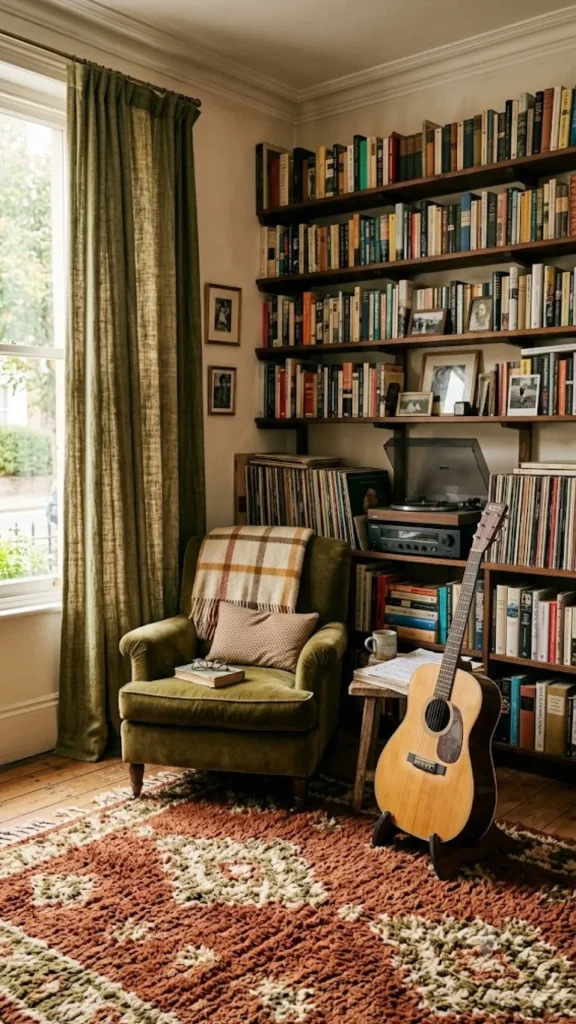
A heavy rug on the floor absorbs reflections from below and reduces impact noise transmitted to lower floors. Heavy curtains on windows reduce sound transmission through glass and soften reflections. Bookshelves filled with books, sofas, upholstered chairs, and wall-hung fabric panels all add absorption without looking like a recording studio. Acoustic foam panels help with high-frequency reflections but do nothing for low-frequency bass buildup or sound transmission through walls, a common misconception worth flagging before anyone buys a full set.
A room treated with heavy textiles, filled furniture, and thick rugs plays noticeably better than a bare room even without a single dedicated acoustic product.
Plan the Layout Around the Instrument
The furniture and layout of a music room should be built around the primary instrument, not the other way around. The practical space requirements vary enormously depending on what you play.
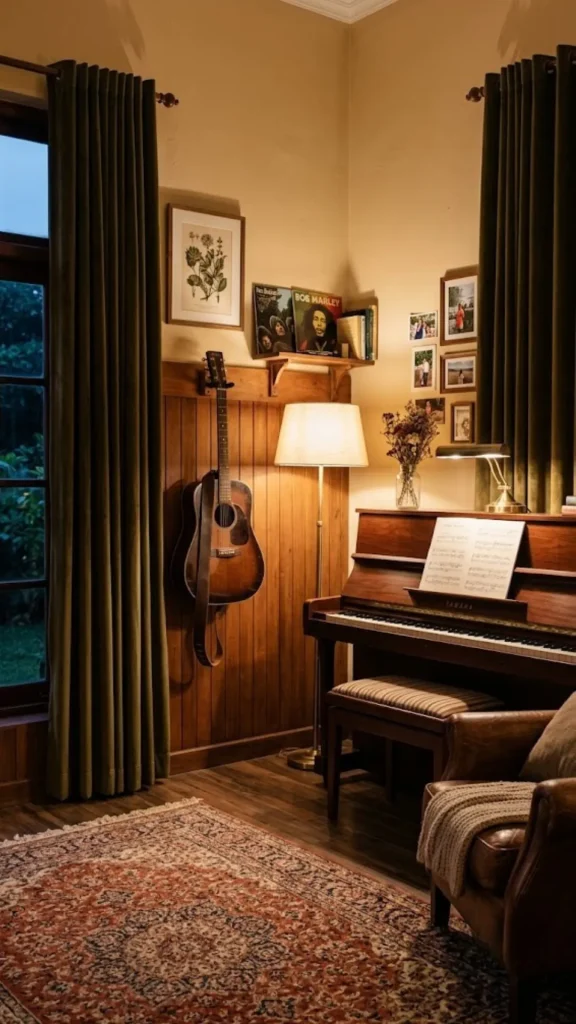
A piano, upright or grand, needs to be positioned away from exterior walls and direct sunlight to prevent humidity damage and tuning instability. An upright piano against an interior wall with a rug underneath is the standard recommendation. A grand piano needs significantly more floor space and ideally sits with the curved side toward the room rather than against a wall.
A drum kit needs the most floor space of any common instrument and generates the most vibration, making it the hardest instrument to accommodate in a rented space. An electronic drum kit with mesh heads is a practical substitute for renters or apartment dwellers, it plays and feels similarly to an acoustic kit while producing a fraction of the sound and vibration.
String players, wind players, and vocalists need enough open floor space to move freely, typically at least a 10×10 foot clear area, with a music stand positioned at a comfortable height and angle.
Home recording setups built around a desk and monitor speakers need the desk positioned away from corners (where bass frequencies accumulate) and monitors placed at ear level with some distance from the back wall.
Use Vertical Space for Storage

Instrument storage is one of the most visually defining elements of a music room and one of the most frequently underplanned. Instruments left on the floor or leaned against walls get damaged, take up floor space, and make the room feel chaotic.
Wall-mounted guitar hangers keep guitars safely displayed and immediately accessible without taking up floor space. A dedicated keyboard stand with a second tier for a laptop or audio interface organizes a home studio setup efficiently. Sheet music and scores managed on wall-mounted shelving or a dedicated filing system keep the floor clear.
A music room with instruments properly stored and displayed tends to look intentional and designed rather than cluttered, the difference is almost entirely in the storage rather than the decorating.
Set the Mood With Lighting
Music rooms benefit from flexible lighting more than almost any other room type. Bright overhead lighting works for reading sheet music and setting up gear. Dimmer, warmer ambient lighting works better for playing by ear, recording, or using the room as a listening space.
A dimmer switch on the overhead light combined with a warm floor lamp or a set of LED strip lights behind shelving gives the room range without requiring a rewire. Warm-toned bulbs in the 2700K–3000K range reinforce the focused, creative atmosphere that most musicians find useful, the same logic that applies to a den or home studio.
Decor That Reflects the Music

A music room is one of the few spaces in a home where personal, specific decor feels completely natural rather than indulgent. Framed gig posters, album covers displayed in frames, instruments hung on the wall, and vintage music equipment used as display pieces, all of these work in a music room in a way they might feel out of place elsewhere in the house.
The most coherent music rooms tend to have a consistent aesthetic thread running through the decor choices, whether that is a vintage analog recording studio feel, a clean modern practice room, or a lived-in folk musician’s space, rather than a mix of unrelated styles. Pick an aesthetic direction early and let it guide the smaller choices.
Budget-First Music Room Setup — A Practical Starting Point
For anyone starting from scratch on a limited budget, a practical music room setup in order of priority is the following:
First, address the floor; a large, heavy rug is the single highest-impact acoustic purchase for the money. Second, add a music stand and instrument storage so the room is immediately functional. Third, hang heavy curtains on any windows. Fourth, add seating; a comfortable chair or small sofa makes the room somewhere you want to spend time. Fifth, address lighting with a floor lamp and a dimmer on the overhead if possible. Everything else, acoustic panels, custom shelving, and recording equipment, builds on that foundation and can be added incrementally.
A music room built in this order tends to be more functional and more used than one where the budget went to aesthetics first.
You don’t need an expansive budget to curate a beautifully relaxing space. Discover affordable inspiration with these Den Room Ideas: How to Decorate a Den on a Budget.