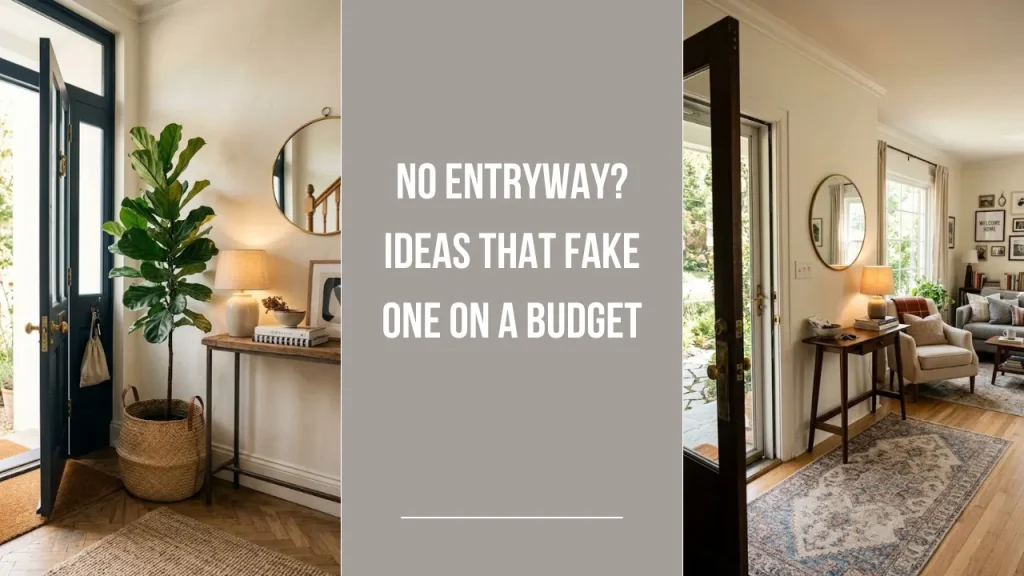

Open the front door and you’re already standing in the living room. No foyer, no hallway, no buffer zone, just shoes, keys, and a coat pile dropped wherever they land, in plain view of the couch. If this sounds familiar, you are far from alone. It is one of the most common layout complaints in older homes, small apartments, and converted spaces, and it comes up constantly in home design forums and Reddit threads from people with the exact same problem.
The good news is that an entryway is more of a feeling than a physical room. You do not need to knock down a wall or steal four feet of your living room to get the function of one, a place to land, drop your bag, and transition from outside to inside. A few intentional choices can fake that transition convincingly, even in a home that was never built with one.
Here are practical entryway ideas that actually work without a renovation budget.
Define the Zone With a Rug
The single fastest way to create the feeling of an entryway where none exists is to define the floor space. A rug placed just inside the front door, even in a home with no architectural separation, signals to the brain, “This spot is different from the rest of the room.” It does not need a hallway to work; a 2×3 or 3×5 rug right at the threshold does the job.
Choose something durable and easy to clean, since this spot takes the most foot traffic and weather in the house. A flat-weave or indoor-outdoor rug holds up better here than something plush.
Add a Narrow Console or Table
A slim console table, even a 10 to 12 inch deep one, pushed against the nearest wall by the door creates an instant landing spot. This is where keys, mail, and sunglasses go instead of the coffee table or kitchen counter. Thrift stores and secondhand marketplaces are an excellent source for narrow consoles, they tend to be overlooked by other shoppers because they don’t fit standard rooms, which keeps the price down.
If wall space is tight, a small round side table works almost as well and takes up less visual weight in an open living room.
Hang Hooks at the Door

Wall hooks are one of the cheapest, highest-impact additions on this list. A row of three or four hooks just inside the door gives coats, bags, and leashes a home instead of letting them migrate onto furniture. This single change does more to make a space feel like an entryway than almost anything else, because it solves the actual daily problem ,where do things go the second you walk in.
Choose hooks that match your hardware finish for a more intentional look, or lean into mismatched vintage hooks from a thrift store for a more collected, lived-in feel.
Use a Room Divider or open shelf.
If the space allows for it, a slim open shelving unit or a freestanding screen placed a few feet inside the door creates a soft visual boundary without closing off light or making the room feel smaller. This works especially well in studio apartments or open-concept layouts where a full wall is not an option.
An open shelf has the added benefit of function, it can hold baskets for shoes, a tray for keys, or even books and plants, so it earns its place even on a tight footprint.
Add a Bench
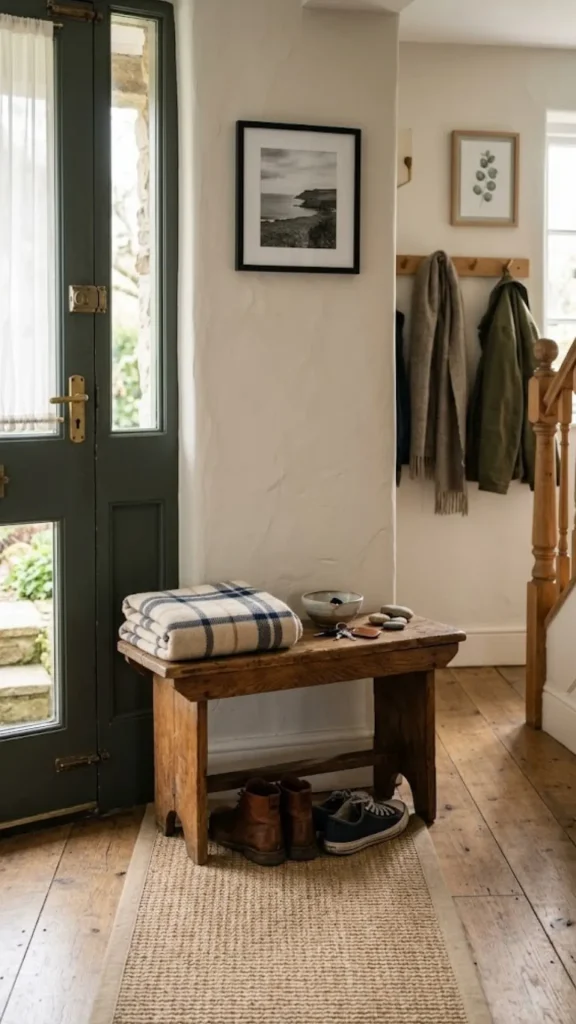
A small bench just inside the door gives you somewhere to sit while putting on or taking off shoes, and it doubles as a visual anchor for the whole zone. It does not need to be large. Even a narrow 24- to 30-inch bench creates enough of a pause point to make the area feel purposeful rather than incidental.
Secondhand benches, old piano stools, or even a sturdy ottoman from a thrift store all work here and tend to cost a fraction of anything labeled “entryway bench” at a retail store.
Change the Lighting
A dedicated light source, a small lamp on the console table, a plug-in wall sconce, or even a battery-powered puck light visually separates the entry zone from the rest of the room the moment it turns on. Most living rooms are lit for the whole space evenly, which is part of why a no-entryway area tends to blend invisibly into everything else. A distinct light source breaks that up immediately.
Use a Mirror to Mark the spot.
A mirror hung near the door does double duty: it is genuinely useful on the way out, and it visually signals “this is a transition point” the same way a mirror does in a traditional foyer. It also makes a tight, awkward corner feel larger and more intentional rather than like an afterthought.
Bring in a plant.

A single tall plant placed just inside the door is a low-cost way to create a soft visual marker for the space. It does not block sightlines the way furniture might, but it still gives the eye something to register as “the entry” before the rest of the room takes over. A faux plant works just as well if natural light near the door is limited.
Layer It, Don’t Force It
The strongest no-entryway fixes rarely come from one big purchase. They come from layering two or three small choices together, a rug plus hooks or a console plus a mirror, so the zone reads as intentional from multiple angles at once. Trying to solve the whole problem with a single large piece of furniture often backfires in a small or open layout, making the space feel cramped rather than organized.
Start with the rug and hooks, since those two alone solve the most common daily frustration, clutter landing in the wrong place, and build from there as budget and space allow.
A real entryway is a layout decision made by an architect decades ago. A functional one is something you can build yourself this weekend with a rug, a few hooks, and a little intention about where things land the second you walk in the door.
Further Reading: Master the art of color theory and find your perfect palette with What Color Goes With Teal? 10 Combinations That Work.