
Teal has a reputation problem. It is gorgeous on a paint chip, gorgeous on Pinterest, and then somehow looks completely different, flat, cold, or oddly nautical once it is actually on a wall or a sofa. The color itself is rarely the issue. What sits next to it almost always is.
Teal lives in an in-between spot on the color wheel, somewhere between blue and green, and that in-between quality is exactly what makes it so hard to pair on instinct. Get the pairing wrong, and teal reads cold and sterile. Get it right, and it reads rich, layered, and surprisingly warm. The difference comes down to a handful of combinations that consistently work and a few that almost never do.
Here is what color goes with teal, broken down by the look you are actually going for.
Teal and Blush Pink — Soft and Unexpected
This is the pairing that surprises people most, and it has become one of the most-used teal combinations in modern interiors for a reason. Blush softens teal’s cooler undertones without fighting them, and the contrast between a muted pink and a deep blue-green feels considered rather than accidental. This combination works especially well in bedrooms and reading nooks a teal headboard with blush throw pillows or a blush accent chair against a teal wall.
Teal and Warm Brass or Gold

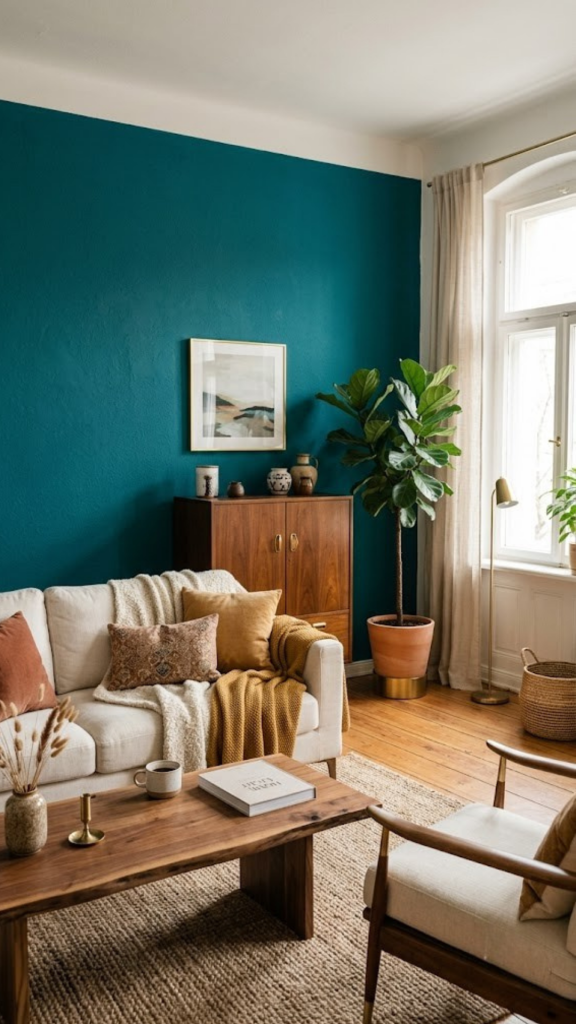
If your teal leans more blue than green, brass is the fix. Metallics with warm undertones, brass, gold, and aged copper pull teal out of cold territory almost instantly. A brass floor lamp, a gold-framed mirror, or brass cabinet hardware against teal kitchen cabinets all do real work here. This is the fastest way to make a teal room feel expensive instead of sterile.
Teal and Terracotta
This pairing leans into teal’s green undertones rather than fighting them, and it has become a favorite in earthy, sun-washed interiors. Terracotta brings warmth and texture, and because both colors carry some depth, neither one washes the other out. A terracotta rug under teal furniture, or terracotta pottery on open teal shelving, gives a room an almost Mediterranean warmth.
Teal and Cream or Ivory
When in doubt, this is the safest and most reliable answer to what color goes with teal. Cream does not compete with teal at all it just gives it room to breathe. Reach for this combination if a space is small and you are worried teal will feel heavy. A cream sofa against a teal accent wall, or cream linens with teal throw pillows, keeps the room feeling open rather than closed in.
Teal and Mustard Yellow

This is a bolder combination, best suited to maximalist or eclectic styling. Mustard and teal sit at very different points on the warmth scale, which creates real visual energy rather than a quiet, blended look. Use it in smaller doses, like a mustard armchair in an otherwise teal room or mustard accent pillows, rather than splitting a room evenly between the two, which can tip into busy.
Teal and Charcoal Gray
For a moodier, more modern look, charcoal grounds teal without competing for attention. This combination shows up often in home offices and media rooms, where a bright, airy palette is not the goal. Charcoal furniture against a teal wall, or a charcoal rug with teal accents, creates contrast without veering into cold.
Teal and Coral or Salmon
Coral and teal sit near-opposite each other on the color wheel, making this one of the highest-contrast pairings on the list and one of the most striking when it works. It calls for a bit of confidence: a coral accent wall against teal furniture, or coral textiles in an otherwise teal-dominant room. It reads playful and a little retro, which makes it a strong choice for kitchens, sunrooms, or anywhere you want energy over calm.
Teal and White

This is the cleanest, most versatile answer and the one most renters gravitate toward because it is nearly impossible to get wrong. White lets teal do all the visual work, which makes this combination ideal for small spaces, rentals, or anyone testing teal out before committing to a heavier palette. Teal accent pieces against all-white walls and furniture is a low-risk way to bring the color in without redecorating an entire room.
Teal and Dusty Rose
A quieter cousin of the teal-and-blush pairing, dusty rose brings in a more muted, vintage feel. This combination tends to suit spaces that already lean traditional or transitional rather than modern, like a dusty rose accent chair against teal walls,or dusty rose and teal florals in soft furnishings.
Teal and Navy
This is a monochromatic-adjacent pairing, since both colors live in the blue family, so layering them together builds depth without true contrast. It is a strong choice for anyone who wants a richer, more dramatic room without introducing a third competing color. Navy accent walls with teal furniture or navy and teal layered textiles add real depth while staying cohesive.
A Quick Rule of Thumb
If you only take one thing from this list teal needs either warmth (brass, terracotta, mustard, or coral) or neutrality (cream, white, or charcoal) to balance it. What tends not to work is pairing teal with other cool, muted tones competing for the same visual space, like a flat gray-blue or a similarly cool sage green, that combination is the one most likely to read flat or accidental rather than intentional.
Start with one pairing in a small dose, a pillow, a vase, or a single accent wall before committing a whole room to it. Teal is a strong color, and the right supporting cast is what makes it look designed rather than overwhelming.
Looking to set up a dedicated zone for relaxation and focus? Check out these highly effective Sensory Room Ideas You Can Set Up on a Budget.