
By Rita Wilkinson
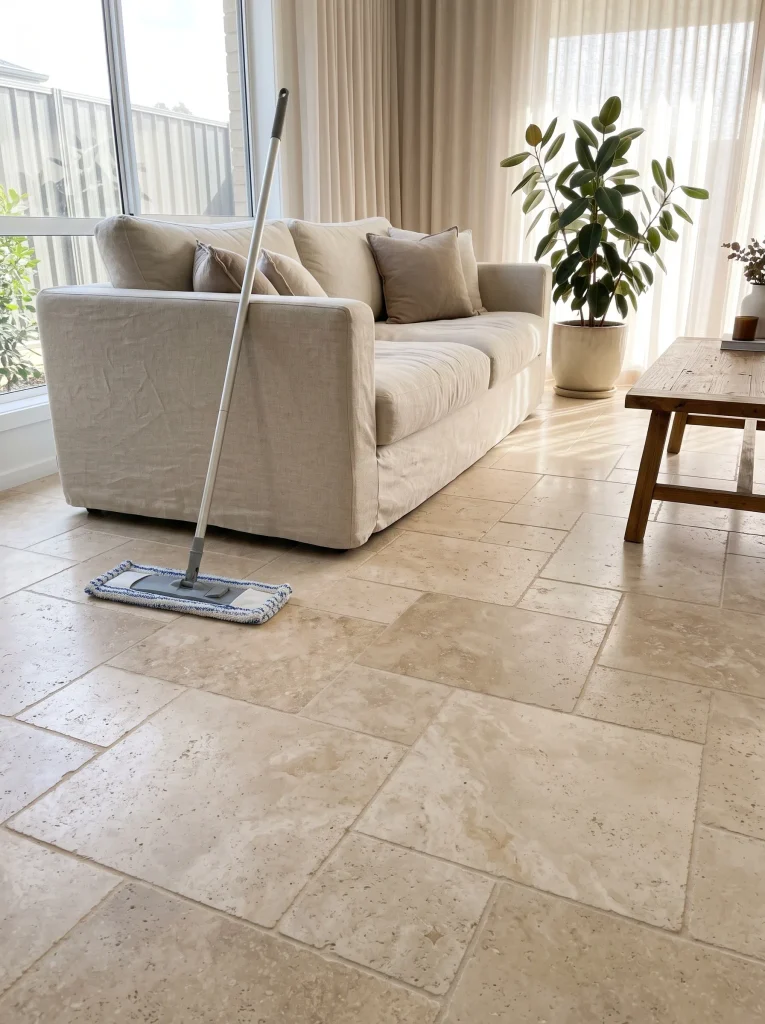
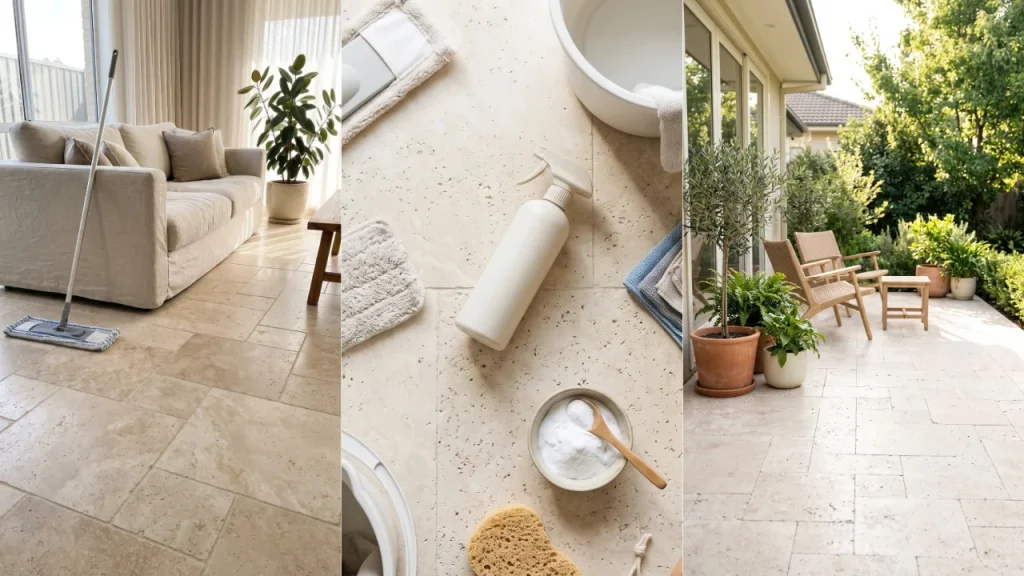
Knowing how to clean travertine tiles the right way is the difference between floors that glow for years and floors covered in dull, cloudy spots. Travertine is gorgeous, but it’s softer and more porous than ceramic or porcelain, so the wrong cleaner can etch the surface in a single mopping. It’s tempting to reach for vinegar because it works on everything else in the house, and that’s exactly how a lot of stone floors get ruined.
The good news is you don’t need pricey stone products or a professional crew for regular upkeep. A few cheap supplies and a gentle routine will do the job. Below are the seven steps I follow, plus what to do about grout, outdoor tiles, and bathroom travertine.
How to Clean Travertine Tiles Without Damaging Them (Supplies First)
Travertine is natural stone full of tiny pores and natural holes. Acids like vinegar, lemon juice, and many bathroom and tile cleaners react with the stone and leave dull etch marks. Harsh scrubbing powders scratch it. So the whole game comes down to three things: gentle, pH-neutral, and never too wet.
The Natural Stone Institute recommends cleaning stone with a neutral cleaner, stone soap, or mild liquid dish detergent and warm water, and it notes that etching comes from acids left on the surface. Travertine Mart specifically lists vinegar, bleach, ammonia, and citrus-based products as ones to avoid on travertine.
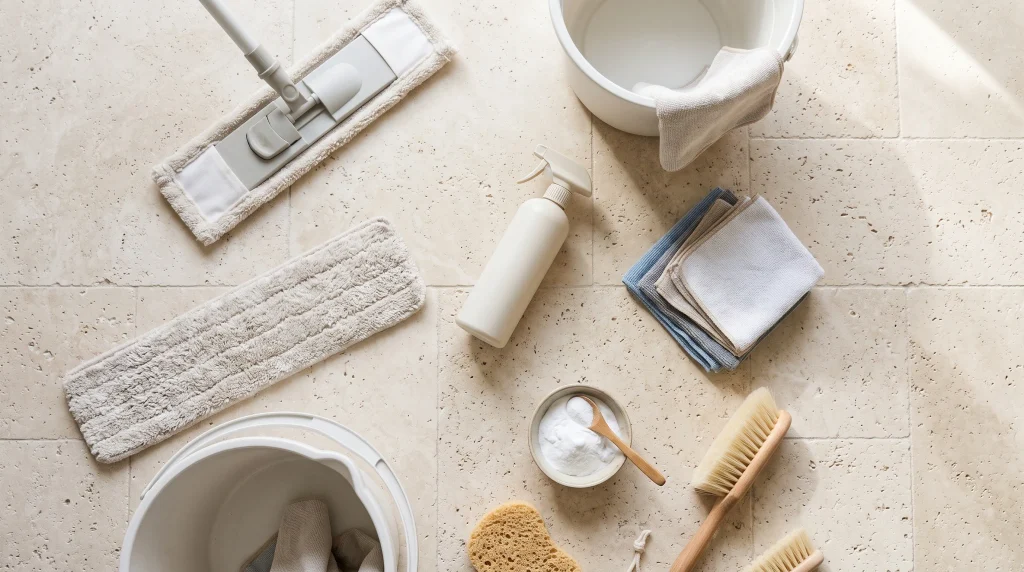
Here’s what I keep on hand, and none of it costs much:
- A soft dust mop or dry microfiber mop
- A flat microfiber mop for damp mopping
- A pH-neutral stone floor cleaner (or a few drops of mild, dye-free, citrus-free dish soap)
- Two buckets, one for the cleaning solution and one for clear rinse water
- Soft microfiber towels
- A soft-bristle brush (an old soft toothbrush works for grout)
- Baking soda and plastic wrap for stains
A quick tip on the dish soap: read the label first and skip anything that advertises lemon, vinegar, or other acidic ingredients.
Step 1: Dry Dust the Floor First
Grit and dust act like sandpaper under a wet mop and under your shoes. Start by going over the whole floor with a dry dust mop, or a vacuum on the hard-floor setting with the beater bar turned off. Get into the corners and along the baseboards, too.
Step 2: Mix a Gentle Cleaning Solution
If you’re using a pH-neutral stone cleaner, follow the dilution on the label. For a budget option, add just a few drops of mild dish soap to a bucket of warm water. Less really is more here. Too much soap leaves a film that makes the tile look cloudy.
Step 3: Mop in Small Sections
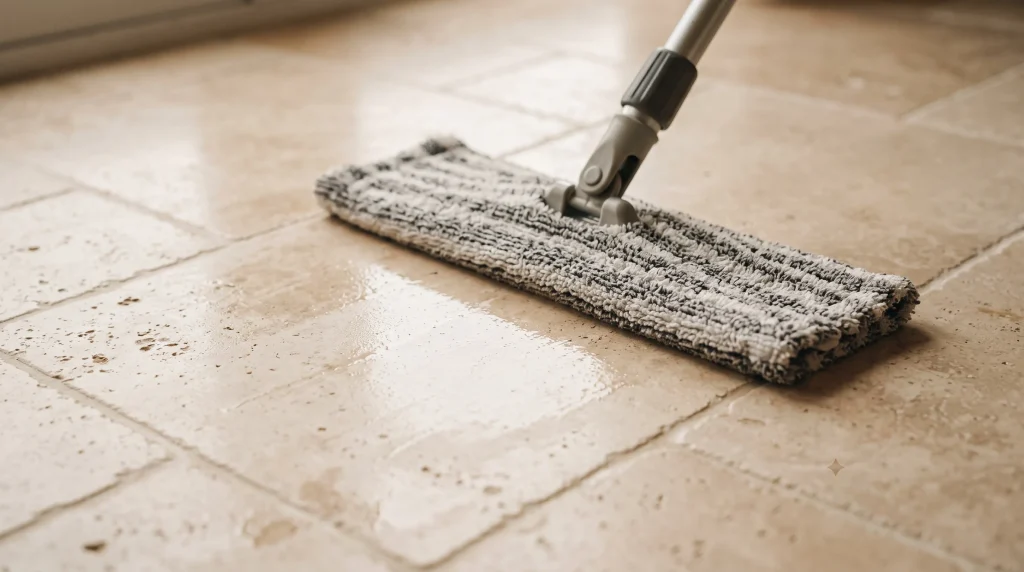
Dip your flat mop, then wring it out until it’s damp, not dripping. Work section by section and don’t let puddles sit, especially over grout lines, since that’s where water soaks in fastest.
Step 4: Rinse With Clean Water
This is the step most people skip, and it’s the number one reason travertine ends up looking dull. Switch to your second bucket of plain water and go over the floor again with a freshly wrung mop to lift any soap residue.
Step 5: Dry and Buff
Finish by drying the floor with a soft microfiber towel or a dry microfiber mop. Drying prevents water spots and mineral marks, which show up fast if you have hard water. It also gives the stone a soft, natural glow.
Step 6: Treat Stains With a Simple Poultice
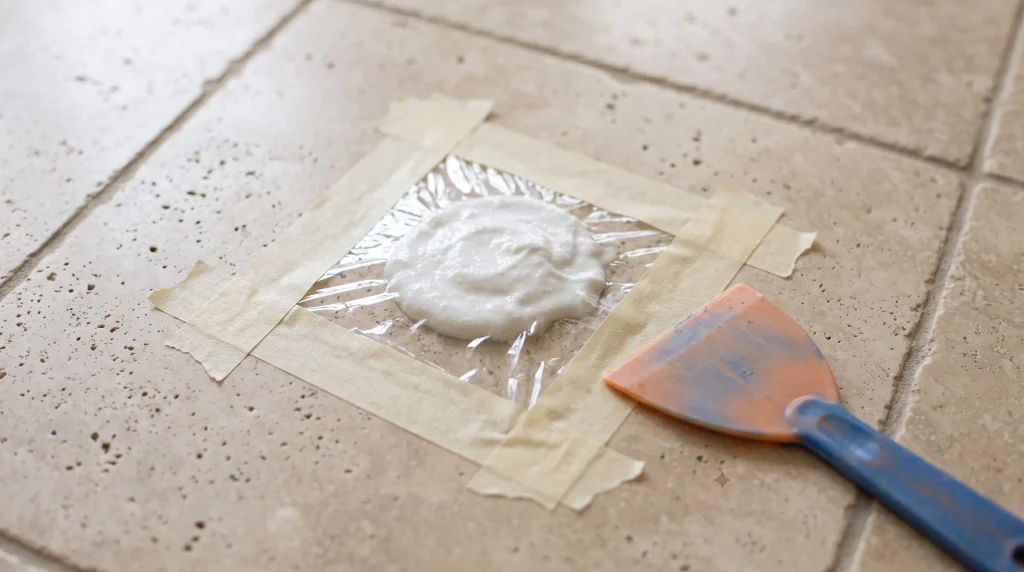
For a stain that mopping won’t lift, mix baking soda with a little water until it’s a thick paste, about the texture of peanut butter. Here’s how to use it:
- Test it on a hidden spot first.
- Spread the paste about a quarter inch thick over the stain.
- Cover with plastic wrap and tape the edges down.
- Leave it for about 24 hours.
- Remove the paste with a plastic scraper or spoon, wipe, and rinse with clean water.
This works well on oily marks and many everyday stains. For rust or ink, skip the store-bought rust removers (they’re usually acidic) and call a stone restoration pro instead.
Step 7: Do the Water Test to Check the Sealer
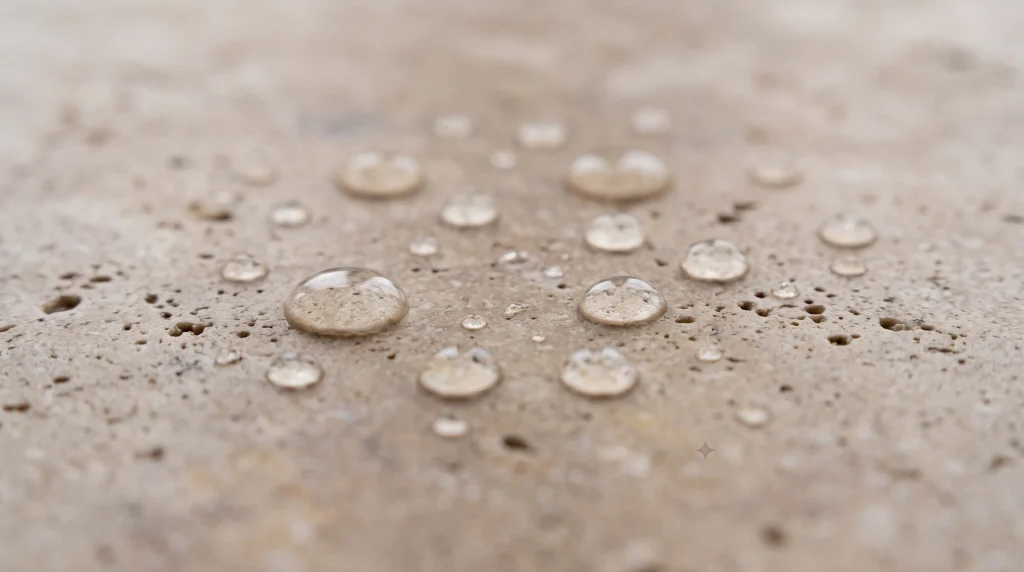
Sealed travertine resists stains much better, so it’s worth checking once or twice a year. Sprinkle a few drops of water on the tile. If they bead up, you’re good. If the spot darkens and soaks in within a few minutes, it’s time to reseal. How often that happens depends on foot traffic and the product, usually somewhere between every one and three years, so check the sealer label. Use a penetrating sealer made for natural stone, and apply it to a clean, fully dry floor.
The Natural Stone Institute also points out that sealing makes stone more stain resistant, not stain proof, so it still pays to wipe spills quickly.
Cleaning Grout Between Travertine Tiles
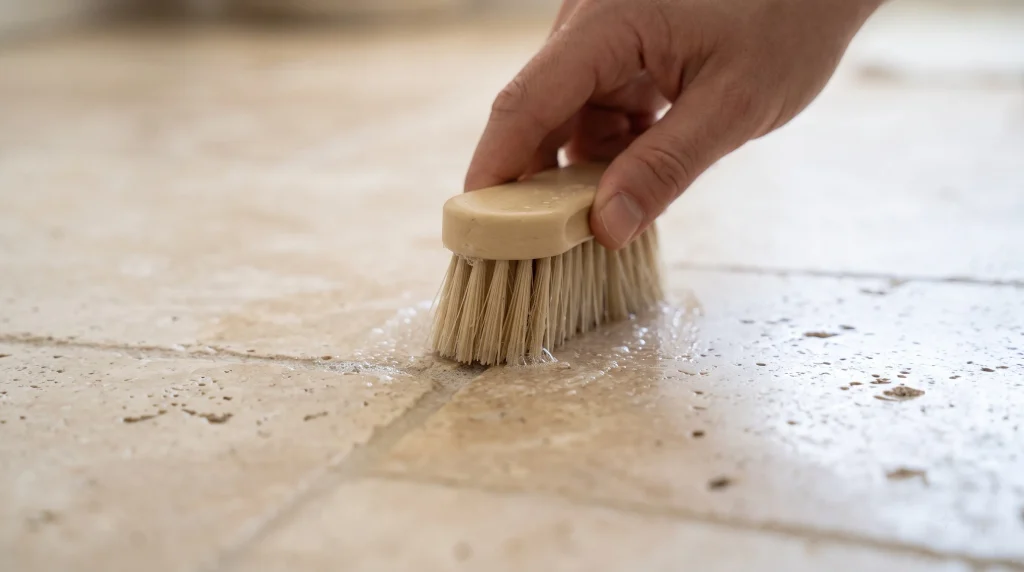
Grout is porous too, and it picks up dirt faster than the tile does. The same gentle approach to how to clean travertine tiles applies to the grout lines. Use your soft brush and the mild cleaning solution, scrub in small circles, then rinse and dry. For stained grout, dab on the baking soda paste, let it sit for 15 to 20 minutes, scrub lightly, and rinse well. Skip bleach and acidic grout cleaners, since they can bleed onto the stone and discolor it. Sealing the grout when you seal the tile keeps it cleaner for longer.
How to Clean Travertine Tiles Outdoors and in the Bathroom
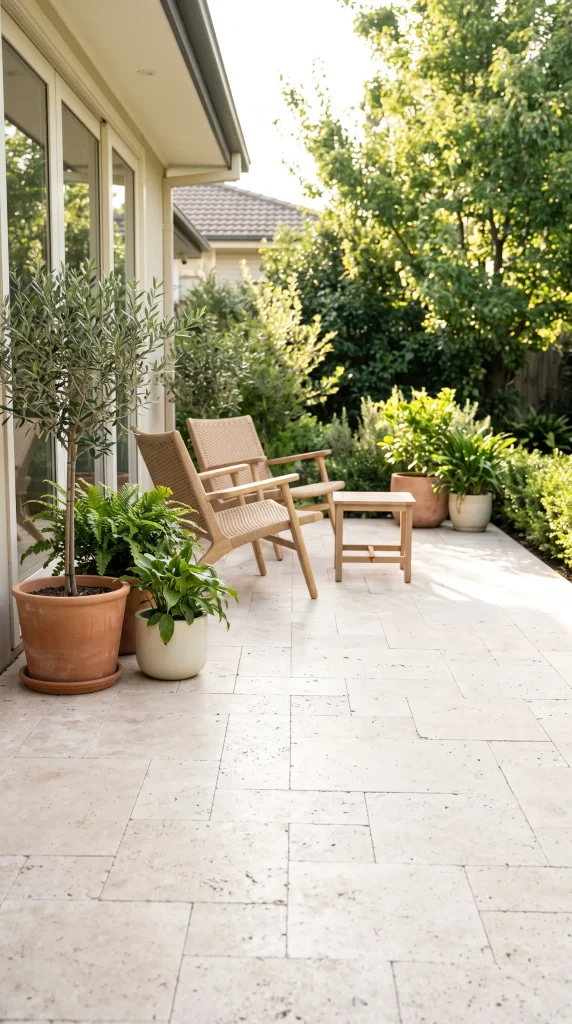
Whenever someone asks me how to clean travertine tiles on a patio, my answer is the same: keep it simple. Sweep first, hose the surface down, scrub gently with a soft brush and your mild solution, and rinse again. Avoid a high-pressure washer, which can pit the surface and blast out the joint filler. For moss or algae, use a product labeled safe for natural stone.
Travertine Mart’s paver care guide says too much pressure or close-range spraying can affect the surface or strip the sealant, which is why I keep the hose gentle and reseal if the water test fails.
In the bathroom, water and soap scum are the main enemies. A few habits help a lot:
- Squeegee or wipe down wet travertine after showers
- Wipe up shampoo, perfume, and cleaner spills right away
- Skip soap scum removers unless they say they’re safe for natural stone
- Dry the floor after mopping to avoid hard water spots
Travertine Cleaning Dos and Don’ts
Do:
- Blot spills right away instead of wiping and spreading them
- Put doormats at every entrance to cut down on grit
- Stick felt pads under furniture legs
- Dust mop regularly and reseal when the water test says so
Don’t:
- Use vinegar, lemon juice, or other acidic cleaners
- Use bleach, abrasive powders, or steel wool
- Soak the floor or leave standing water
- Ignore dull patches, since etched spots need honing or polishing by a pro
Travertine Cleaning FAQs
Can I use vinegar to clean travertine? No. Vinegar is an acid, and it will etch travertine and leave dull spots.
How often should I clean travertine floors? Dust mop a few times a week, more often in busy areas, and damp mop once a week or every other week.
Can I use a steam mop on travertine? I skip it. Heat and moisture can be hard on the sealer and the grout, and many stone care pros advise against it. If you’re tempted, check your tile and sealer manufacturer’s guidance first.
Is travertine hard to maintain? Not once you have a routine. Regular dusting, a gentle pH-neutral clean, and resealing when needed cover almost everything.
Final Thoughts
Once you know how to clean travertine tiles, the routine is easy and cheap: dust first, use a gentle pH-neutral solution, rinse, dry, and keep the sealer up to date. Avoid acids and harsh scrubbers, and your floors will look beautiful for years without a big spending spree. If you’re decorating around natural stone on a budget, check out more ideas in our Budget Tips section.
“Because travertine is a relatively soft, calcium-based stone, heavy metal stands and rolling casters can easily scratch the seal. This is especially important to keep in mind when exploring creative music room ideas, where layering plush area rugs over your stone tile not only prevents surface scuffs from instrument stands but also absorbs excess echo.”
“In spaces where acoustics and heavy gear matter—like when setting up a dedicated home music room—keeping grit off your travertine tiles and placing felt pads under every stand will save your floors from permanent etching.”
