
I almost bought a king bed for a bedroom that, in hindsight, was barely big enough for a queen. I had measured the bed itself and the open floor space, but I hadn’t accounted for the dresser, the door swing, or the fact that I’d need to actually walk around the thing every day. It’s an easy mistake to make, because most furniture listings only tell you the size of the bed — not the size of room it actually needs to live in comfortably.
The Bed Itself

A king mattress is 76 inches wide by 80 inches long. With a frame and headboard, add a few more inches on each side — figure roughly 80 inches wide by 85 inches long as the real footprint once it’s assembled.
The Room Size You Actually Need

As a working minimum, most design guides land on 12 feet by 12 feet (144 square feet) for a bedroom to comfortably fit a king bed plus basic walking space and a dresser or nightstands. That’s not a hard rule — it’s the point where the room stops feeling like the bed is wall-to-wall.
If your room is smaller than that, a king bed can still physically fit, but you’ll likely be choosing between walking space on one side of the bed or having room for a dresser. Both is where the math gets tight below 12×12.
Why the “Just the Mattress” Math Is Misleading

It’s tempting to compare the bed’s footprint to your room’s square footage and call it good if there’s leftover space. The problem is that leftover space needs to do several jobs at once: walking room on at least one side (ideally both), space to open closet and room doors fully, room for a dresser or nightstands, and enough clearance that the room doesn’t feel like an obstacle course every morning.
A reasonable rule of thumb: leave at least 24 to 30 inches of walking space on each side of the bed where possible, and at least 24 inches at the foot of the bed if there’s a dresser facing it.
If Your Room Is Smaller Than 12×12
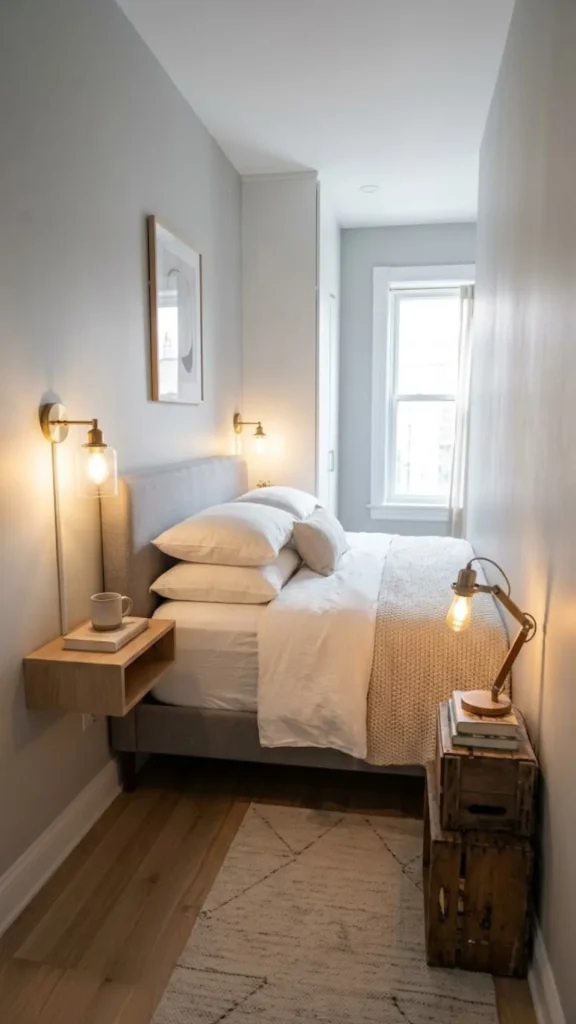
A king bed isn’t necessarily off the table — it just means making some tradeoffs:
- Push the bed against a wall instead of centering it, and accept walking space on only one side.
- Skip the matching nightstands and use wall-mounted shelves or sconces instead, which free up floor space on both sides of the bed.
- Reconsider a queen. A queen mattress is 60 inches wide by 80 inches long — a foot narrower than a king — and in a tight room, that one foot of width can be the difference between a room that breathes and one that doesn’t.
Don’t Forget the Door Swing
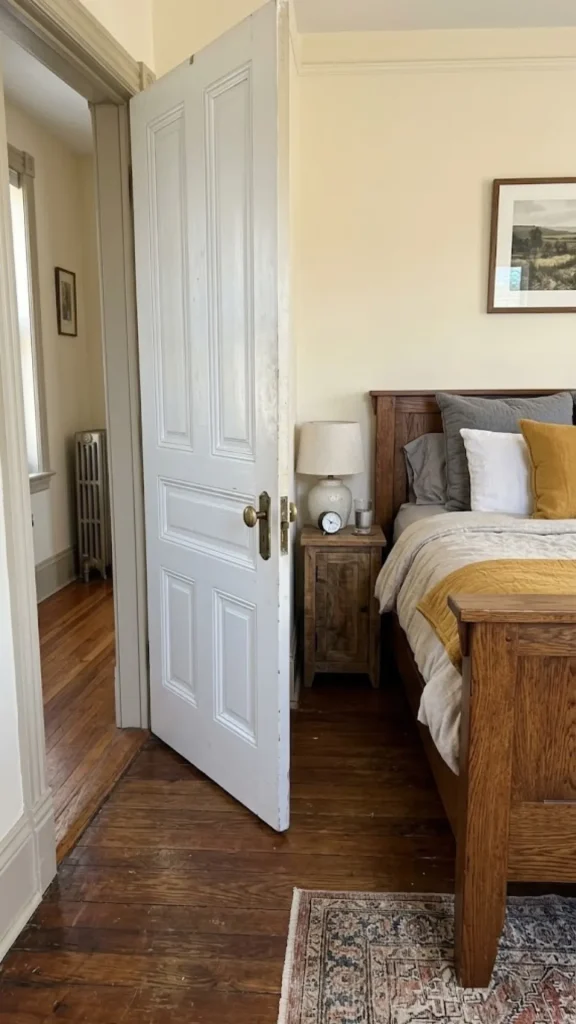
This trips people up constantly in older buildings and smaller rentals: measure how far your bedroom door swings open, and make sure the bed frame (and ideally a nightstand) doesn’t block it. A king bed positioned even a few inches too far into the room can turn “the door doesn’t fully open” into a daily annoyance you didn’t see coming when you were just eyeballing floor space.
The Bottom Line
12×12 is the comfortable benchmark, not a hard cutoff. Measure your actual room, account for walking space and door swing — not just the mattress footprint — and decide from there whether a king fits the way you want it to, or whether a queen gives you a room that feels less like a furniture maze.
Don’t let a dim entryway bring down your home’s vibe. Explore these Dark Hallway Ideas to Brighten It Up on a Budget for instant inspiration.