
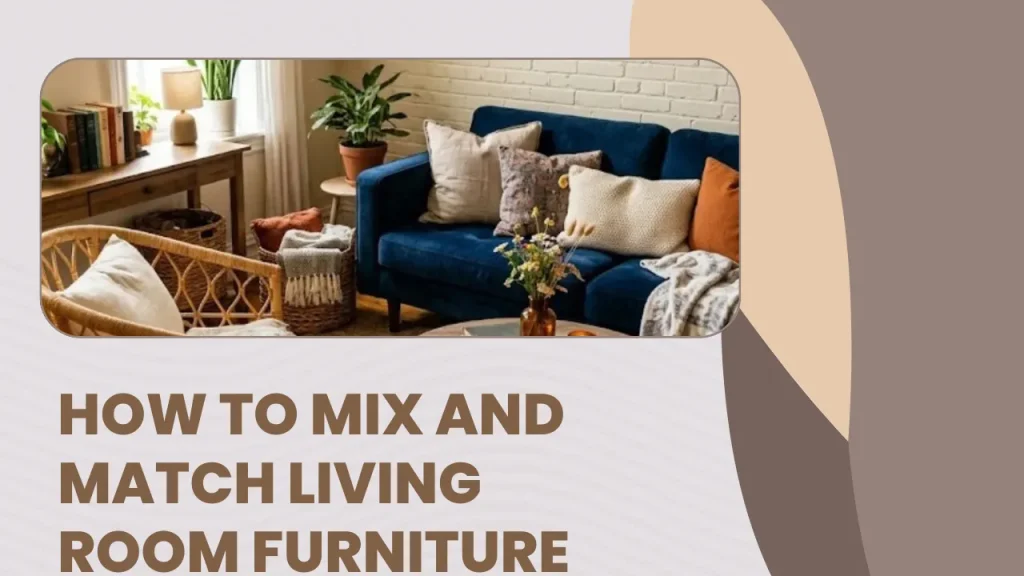
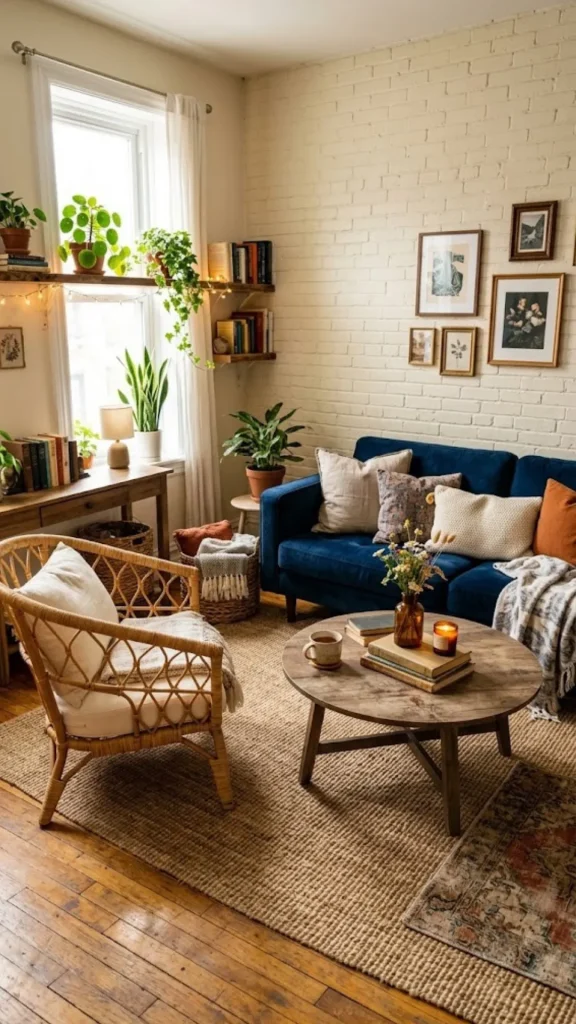
Nobody buys a whole living room set anymore. Most people end up with a sofa from one place, a coffee table inherited from a parent, an armchair found secondhand, and a rug bought on a whim because it was on sale. The result can look like a cohesive, collected space, or it can look like a room that just happened by accident. The difference comes down to a handful of decisions, not luck.
This is good news if your living room furniture does not match. Matching furniture sets are actually less popular now than they have been in years. Designers have been pushing mixed, collected interiors for a while because they look warmer, more personal, and frankly more interesting than a showroom set that everyone else bought too.
Here is how to make mismatched furniture actually work together.
Why Matching Sets Often Look Worse, Not Better
A matching three-piece living room set, sofa, loveseat, and armchair all in the same fabric,can look flat. Everything is the same color, the same shape, the same texture. There is nothing for the eye to land on. It reads as a showroom display rather than a room someone actually lives in.
Mixed furniture, done thoughtfully, creates depth. Different shapes, slightly different tones, a mix of old and new — these things give a room personality. The goal is not for nothing to match. The goal is for things to feel related even when they are not identical.
Pick One Thing to Repeat
The easiest way to make mismatched furniture cohere is to repeat one element across the room. This could be a color, a material, a leg style, or a texture.
If your sofa is navy, repeat navy somewhere else, a throw pillow, a piece of art, a vase. If your coffee table has black metal legs, look for a side table or a lamp with black metal accents too. If your armchair is rattan, bring rattan in again through a basket or a mirror frame.
This single repeated element is what ties a mismatched room together. The brain reads it as intentional even when nothing actually matches, because there is a thread running through the space.
Stick to One Undertone
Furniture and decor pieces all carry an undertone,warm or cool. Wood tones lean warm (honey, golden oak) or cool (gray-washed, ashy). Metals lean warm (brass, gold) or cool (chrome, black, and silver). Fabrics lean warm (cream, terracotta, and rust) or cool (white, navy, grey).
The fastest way to make a mismatched room look chaotic is to mix warm and cool undertones without intention. A warm honey wood coffee table next to a cool grey-washed bookshelf will always look slightly off, no matter how nice each piece is individually.
Pick one undertone, warm or cool, and stick with it across your wood, metal, and fabric choices. This single decision does more to unify a mismatched room than almost anything else.
Vary the Shapes on Purpose
A living room full of straight lines and sharp corners feels rigid. A living room full of soft curves feels shapeless. The best mixed-furniture rooms use both deliberately.
If your sofa has clean, straight lines, pair it with a round coffee table or an armchair with curved arms. If your coffee table is rectangular, bring in a round side table or a curved floor lamp. This contrast between angular and rounded shapes is what makes a room feel curated rather than random.
Look at your current pieces and identify what shape language each one speaks. Then choose your next piece specifically to balance it, not match it.
Use a Rug to Anchor Everything
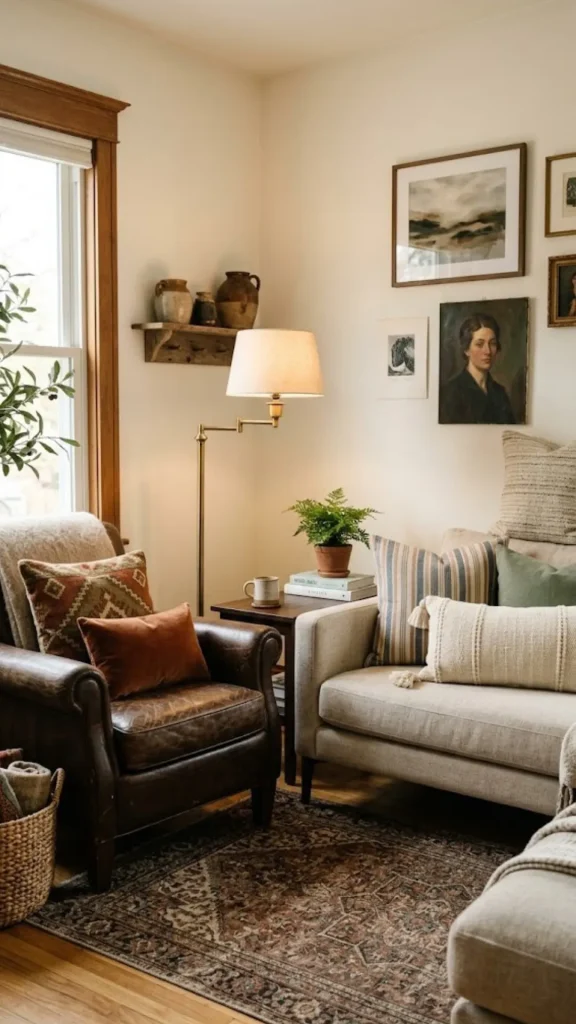
A rug is the single most effective tool for making mismatched furniture look intentional. It acts as a visual base that pulls every piece sitting on it into one cohesive group, regardless of how different those pieces are individually.
Choose a rug in a neutral tone or a pattern that includes colors from your existing furniture. Place it so all your main seating pieces,sofa, armchair, coffee table,sit at least partially on it. A rug that is too small, with furniture floating around the edges, makes a room feel disconnected no matter how well the furniture itself works together.
A good area rug runs $50 to $150 for a decent size at IKEA, Amazon, or Wayfair. This is one purchase worth spending a little more on, since it does so much of the visual work in the room.
Let Pillows and Throws Do the Connecting

Throw pillows and blankets are the cheapest, lowest-commitment way to tie mismatched furniture together. If your sofa, armchair, and ottoman are all different colors, a few pillow covers in a shared color palette across all the seating pieces immediately makes them read as part of the same room.
Pick two or three colors from your existing pieces, pull them from the rug, a piece of art, or the wood tones in the room, and use those same colors in pillow covers and throws across every seat. This is the easiest, cheapest fix in this entire guide, and it works almost every time.
A set of pillow covers runs $10 to $25 for a pair. A throw blanket runs $20 to $40. Both are easy to change later if your taste shifts.
Group Similar Metals and Finishes
Lamps, picture frames, drawer pulls, and curtain rods all have a metal finish, and these finishes are easy to overlook when buying furniture piece by piece over time. A room with brass lamps, chrome picture frames, and black curtain rods feels scattered even if the furniture itself is well chosen.
Pick one metal finish, brass, black, or chrome, and try to use it consistently across your smaller accessories. This does not mean every single metal object in the room needs to match exactly, but having a dominant finish that shows up two or three times creates cohesion.
This is a slow, ongoing process rather than a single purchase. Swap things out as you replace lamps or frames over time rather than buying everything new at once.
Trust the 60-30-10 Rule for Color
If your mismatched furniture feels chaotic specifically because of color, the 60-30-10 rule is worth applying. Sixty percent of the room should be your dominant neutral,walls, large furniture, and flooring. Thirty percent should be a secondary color, a rug, curtains, or an accent chair. Ten percent should be an accent color used sparingly,pillows, art, small accessories.
This ratio prevents any single mismatched piece from overwhelming the room, because no color is competing equally for attention. It also gives you permission to use a bold or unexpected color in small doses without it clashing with everything else.
Do Not Force Everything to Match
The goal of mixing and matching living room furniture is not to disguise the fact that your pieces came from different places and different times. The goal is to make those differences feel intentional rather than accidental.
A slightly worn vintage armchair next to a newer sofa is not a problem if the colors relate and the proportions work. In fact, that contrast between old and new, found and bought, is exactly what makes collected, mismatched living rooms feel more interesting than a matching three-piece set ever could.
Step back from your room periodically and ask whether it feels balanced rather than whether everything matches. Balance is the actual goal. Matching was never required.
Mismatched living room furniture is not a problem to fix. It is a starting point to work with. Pick one undertone, repeat one element, anchor everything with a rug, and let pillows and throws do the rest. The room will start to feel pulled together far faster than you expect, without buying a single new piece of furniture.
Ready to bring the soothing colors of nature indoors without overspending? Explore our top Earthy Room Ideas That Feel Cozy on a Budget.