
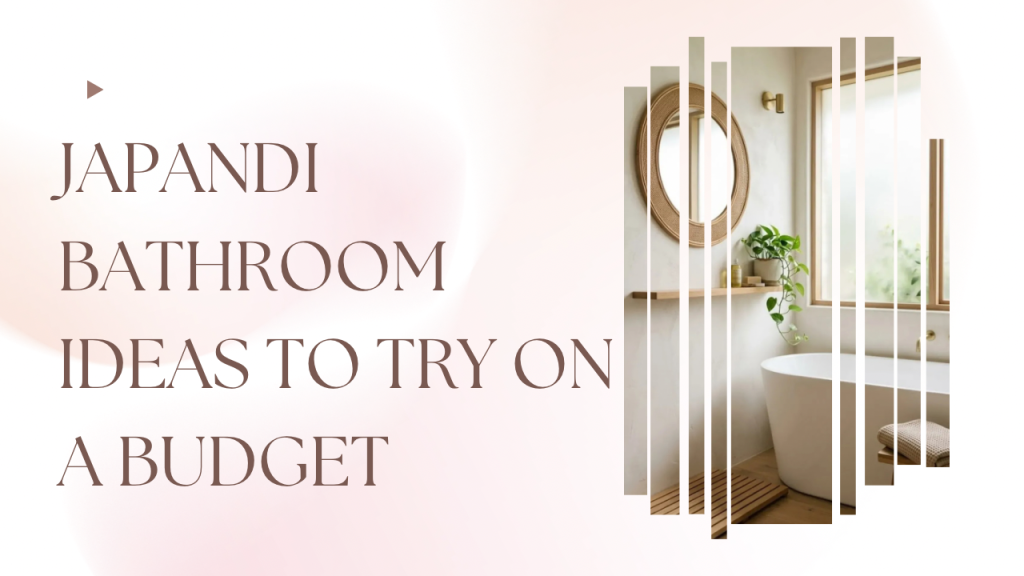
The Japandi bathroom is one of the most searched decor styles right now, and once you understand what it actually is, it makes complete sense why. Japandi is the combination of Japanese minimalism and Scandinavian design. Both styles value simplicity, natural materials, calm color palettes, and spaces that feel intentional rather than cluttered. Put them together and you get a bathroom that feels like a spa without costing like one.
The good news is that Japandi is one of the most budget-friendly aesthetics you can go for. It is built on restraint, fewer things, and better choices. You do not need to rip out your tiles or install a soaking tub. You need the right colors, a few natural materials, and the discipline to take things away rather than add more.
Here is how to create a Japandi bathroom on a budget.
What Is the Japandi Bathroom Style
Japandi bathroom design is defined by a handful of consistent elements that show up across every version of the style. Natural wood tones, usually light oak or bamboo, paired with muted, earthy neutrals like warm white, greige, clay, or soft charcoal. Clean lines with no unnecessary decoration. Textures that feel organic: stone, linen, rattan, ceramic. Plants that earn their place rather than crowd the space.
What makes Japandi different from plain minimalism is the warmth. Pure minimalism can feel cold and clinical. Japandi has warmth in its wood tones, its soft neutrals, and its imperfect natural textures, a concept the Japanese call wabi-sabi, which means finding beauty in imperfection and simplicity.
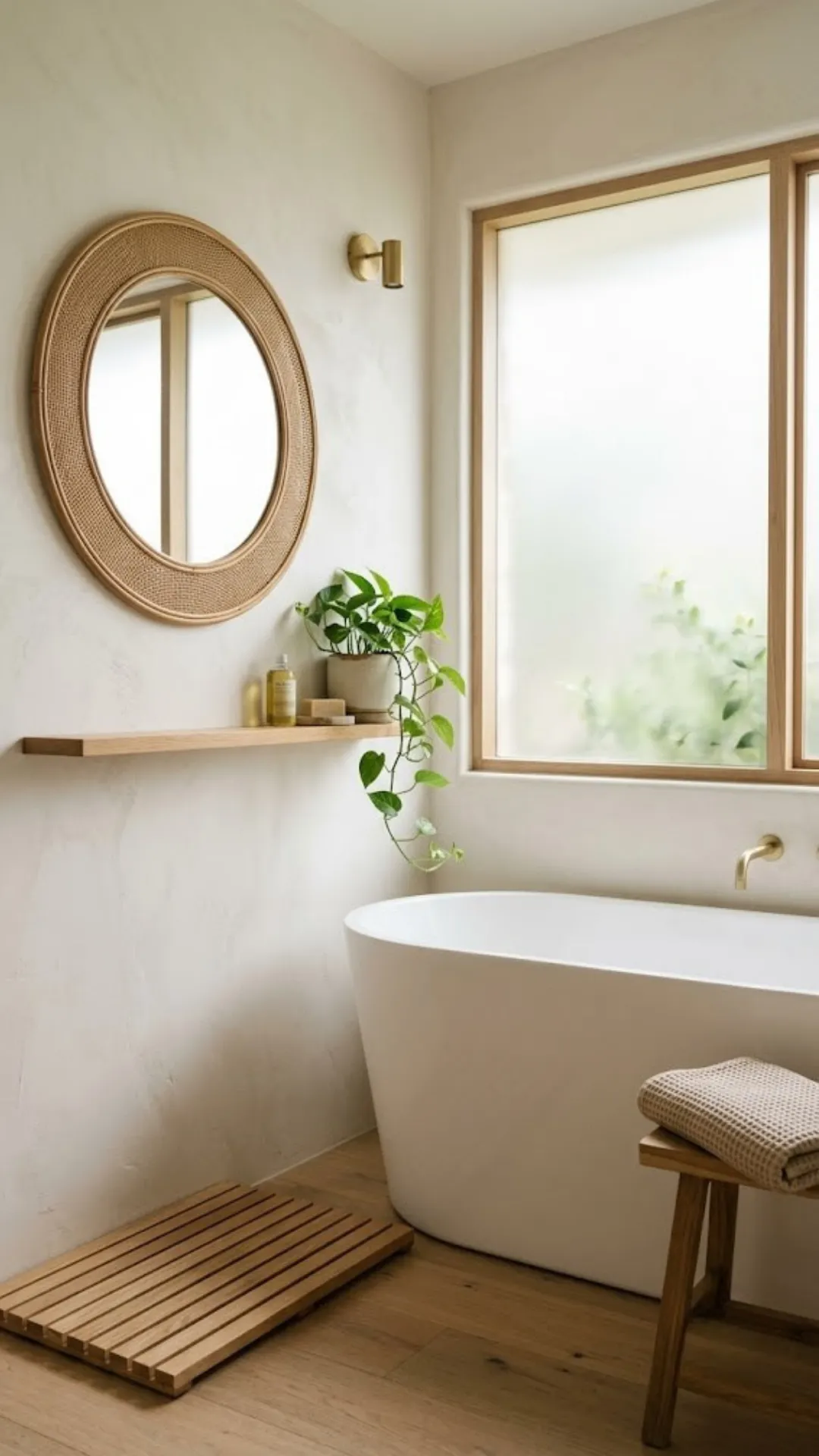
In a bathroom, this translates to warm white or greige walls, a wooden bath mat or bamboo accessories, simple white or stone-look fixtures, a single plant, and clean storage with nothing left on the counter.
Start With the Color Palette
The japandi bathroom color palette is what makes the whole look work. Get this right and everything else falls into place.
The base should be warm white, off-white, or a very soft greige. Not a cool stark white, which reads more Scandinavian clinical than Japandi warm. Think the color of warm cream or smooth plaster. This goes on walls, towels, and any large surfaces.
Layer in warm neutrals from there. Soft clay, warm taupe, mushroom, or a very muted sage green all work as accent colors. These appear in smaller doses,a hand towel, a ceramic dish, a plant pot.
The wood tone is the third layer. Light oak, bamboo, or pale walnut. This appears in accessories, a bath mat, a shelf, and a mirror frame. It adds warmth and prevents the palette from feeling flat.
Avoid anything too bright, too saturated, or too cool. Navy, royal blue, bright white, or stark black all break the Japandi aesthetic. If you want to use black, use it very sparingly: thin cabinet hardware, a tap finish, a single frame, not as a dominant color.
Swap Your Bath Mat for a Wooden One

This is the single fastest way to add a Japandi feeling to any bathroom. A slatted wooden bath mat, usually teak or bamboo,replaces a fabric mat and immediately changes the feel of the floor. It reads as spa-like, intentional, and distinctly Japandi.
Wooden bath mats cost $20 to $45 on Amazon. They are easy to maintain, and they last far longer than fabric mats. Look for teak or acacia wood with a slatted design and rubber feet so it does not slide.
If you prefer to keep a fabric mat, a plain linen or cotton mat in warm white, oatmeal, or soft clay achieves a similar effect. Just avoid fluffy, brightly colored, or patterned options; they break the Japandi aesthetic immediately.
Replace Plastic Accessories With Natural Materials
Most bathrooms accumulate plastic organizers, bright synthetic accessories, and mismatched containers that make the space feel chaotic. In a Japandi bathroom, every surface item should look like it was chosen, not collected.
Go through your bathroom counter and remove anything plastic, anything brightly colored, and anything you do not use every day. What remains should be only the essentials, and those essentials should be decanted into better containers.
A bamboo toothbrush holder. A ceramic soap dish in warm white or matte clay. A small rattan or woven basket for cotton pads or hair ties. A stone or ceramic tray for perfume bottles or hand cream. These items cost very little individually; you can find all of them on Amazon or at TJ Maxx for under $10 to $20 each, but together they completely transform the counter.
Decant your hand soap into a simple ceramic or glass pump dispenser. The original plastic bottle is the single biggest thing that breaks a Japandi bathroom look.
Add One Plant
Japandi design does not pile plants in every corner. It uses one plant, placed deliberately, where it earns its position and adds life without creating clutter.
The best plants for a Japandi bathroom are those that thrive in humidity and low to medium light. A small pothos on the windowsill, a peace lily on a shelf, a snake plant in the corner, or a trailing string of pearls hanging near a light source all work beautifully. A single stem of eucalyptus hung from the showerhead is a classic Japandi bathroom move, it looks elegant, smells incredible, and costs almost nothing.
If your bathroom has no natural light, a high-quality artificial plant in a simple ceramic pot works perfectly. The goal is the organic shape and texture, not necessarily a living plant.
Upgrade Your Towels
Towels are one of the most visible elements in a bathroom and one of the cheapest to change. In a Japandi bathroom, towels should be plain, in muted neutral tones, and neatly folded or hung.
Replace any bright, patterned, or mismatched towels with a matching set in warm white, oatmeal, or soft greige. Waffle-weave towels are particularly popular in Japandi bathrooms because the texture reads as intentional and artisanal rather than generic.
A set of two bath towels and two hand towels in a coordinating neutral runs $30 to $50 at Target, Walmart, or Amazon. Fold them neatly or roll them into a small basket on the counter for that spa-like finish.
Add a Wooden Shelf or Ladder
Open shelving in light wood is one of the most characteristic elements of the japandi bathroom. A single floating shelf in oak or bamboo above the toilet or beside the sink gives you a surface to style with a plant, a candle, a folded hand towel, and a small ceramic dish. Keep it minimal,three to five items maximum.
If you rent and cannot install a floating shelf, a small bamboo ladder shelf leaning against the wall achieves the same effect. These run $25 to $50 at IKEA or Amazon and require no installation.
Style the shelf with intention. One plant, one candle in a simple holder, one small ceramic or stone object, one folded towel. That is all. Resist the urge to add more.
Replace Your Mirror
Most bathroom mirrors are purely functional, frameless, plain, and uninspiring. In a Japandi bathroom, the mirror is a design element. A round or arched mirror in a thin wood frame or a simple black metal frame immediately elevates the whole space.
Round mirrors in particular are strongly associated with Japandi style. The soft curve contrasts with the clean lines of tiles and fixtures and adds visual warmth. Look for options with a light oak, bamboo, or rattan frame for the maximum Japandi effect.
Good mirrors in the right style cost $30 to $80 at IKEA, Amazon, or Target. Installing one is usually just two screws,no professional needed.
Keep Surfaces Clear

This is the most important Japandi principle and the one that costs nothing. The Japandi bathroom is defined as much by what is not there as what is. A cluttered counter, a crowded shelf, or a floor covered in products breaks the entire aesthetic no matter how good your other choices are.
Keep the counter to absolute essentials only. Everything else goes inside a cabinet, in a drawer, or in a closed basket. The soap dispenser, a single plant, and maybe a small tray,that is the entire counter. Anything more than that starts to work against the style.
Clutter is the enemy of Japandi. Simplicity is the whole point.
A Japandi bathroom does not require renovation. It requires editing. Take things away, replace plastic with natural materials, bring in warm wood tones, and keep every surface deliberately simple. The result is a bathroom that feels calm, considered, and genuinely beautiful, regardless of the size of the space or the budget you are working with.
Got an awkward nook or layout puzzle? Discover how to maximize it in our guide, Alternative Living Spaces: Turning the Weird Extra Room in Your Rental Into Real Space.