

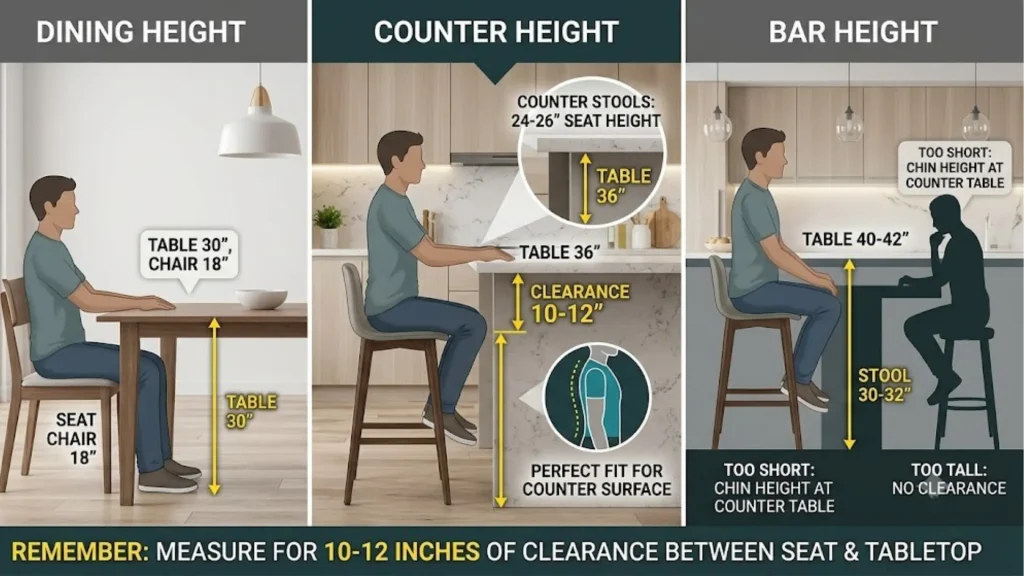
A counter table is, at its simplest, a table built to standard kitchen counter height, about 34 to 36 inches tall, compared to a regular dining table’s 28 to 30 inches. It pairs with counter stools instead of standard dining chairs, and it shows up most often as a kitchen island substitute, a breakfast nook table, or a stand-alone piece in a small space where a full dining table would feel oversized.
Why the Height Actually Matters

That 4-to-6-inch difference isn’t arbitrary. Counter height puts the table surface roughly level with a kitchen counter, which is exactly why counter tables work so well as island substitutes in apartments that don’t have a real island. It also visually reads as a slightly more casual, bar-adjacent setup than a formal dining table, useful if you’re trying to make a small kitchen-dining combo feel less cramped.
Where a Counter Table Actually Makes Sense
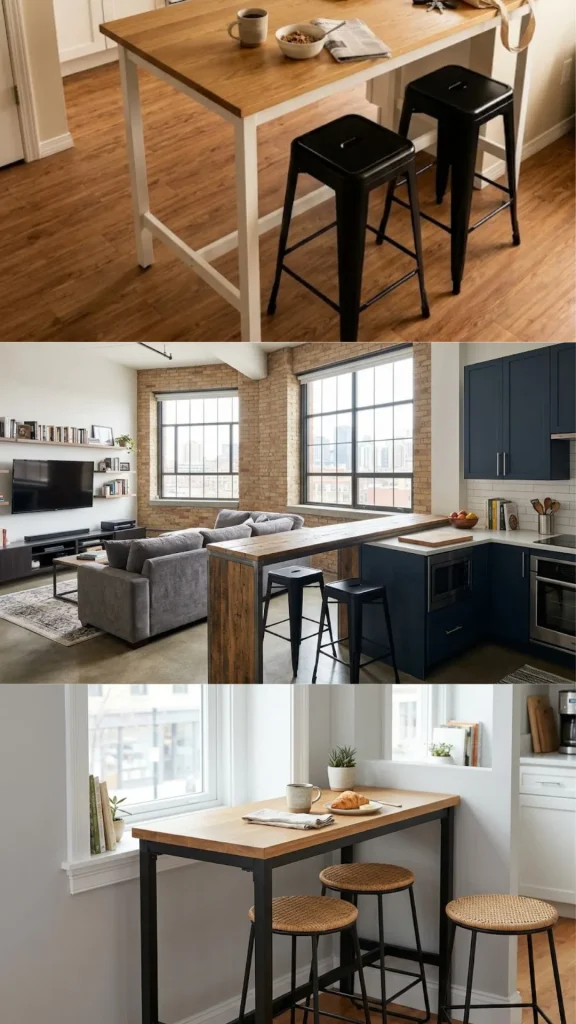
No kitchen island. A lot of rental kitchens are missing the island that the rest of the apartment seems designed around. A counter table parked near the kitchen entrance does a lot of the same job, a spot for quick meals, prep space, or somewhere to set things down without needing a full renovation.
Open-concept studios. In a studio or open-plan layout, a counter table can visually separate a kitchen zone from a living zone without a wall, since the height shift alone reads as a transition between spaces.
Small breakfast nooks. Counter-height tables paired with stools instead of chairs take up less visual and physical space than a full dining set, since stools are typically narrower and can usually be tucked further under the table when not in use.
Where It Doesn’t Make Sense

If you’re hosting actual sit-down dinners regularly, counter height starts to feel informal and a little awkward for that purpose; it’s built around quick meals and casual seating, not a multi-course dinner with guests. And if you’ve got kids or anyone less steady on their feet, counter stools (which usually lack arms and are taller than dining chairs) are a worse choice than a standard table and chair setup.
The Stool Question
A counter table needs counter stools specifically, not bar stools, which are built for an even taller surface (40 to 42 inches), and not standard dining chairs, which are too short and will leave you eating at chin height. If you already own stools and are shopping for a table to match, measure the stool’s seat height first; you want roughly 10 to 12 inches of clearance between the seat and the underside of the tabletop.
The Bottom Line
A counter table isn’t a stylistic choice so much as a height-driven decision: it solves a specific problem (no island, an oddly proportioned small space, a desire for more casual seating) better than a standard dining table does. If none of those problems apply to your space, a regular dining table is still the more flexible, more comfortable everyday choice.
For more Mid-Century Modern Decor on a Renter’s Budget inspiration, read our full guide on :Mid-Century Modern Decor on a Renter’s Budget: What Actually Matters