

I used to think mid-century modern meant “expensive Eames chair I’ll never afford.” Then I actually started reading about the style instead of just scrolling past it on Pinterest and realized most of what makes a room read as mid-century has nothing to do with the price tag on any single piece. It’s a handful of consistent design choices, and almost all of them are achievable secondhand or with budget pieces if you know what you’re looking for.
What Actually Defines the Look

Mid-century modern isn’t a vibe so much as a specific set of design rules from roughly the 1940s through the 1960s: clean lines, minimal ornamentation, organic curved shapes mixed with geometric ones, and a strong relationship between form and function; nothing on a piece of furniture exists just to look fancy.
The materials matter too. Warm woods (walnut and teak especially), tapered legs, and a mix of natural materials with newer-for-the-era ones like molded plastic or fiberglass. Color palettes tend toward warm neutrals with one or two bold accent colors, like mustard, burnt orange, olive, or teal, rather than an all-neutral or all-bright room.
Where to Actually Spend Money

If you’re going to invest in one real piece, make it something with a strong, recognizable silhouette, a sculptural chair, a credenza with tapered legs, or a pendant light with a distinctive shape. These are the pieces that do the most visual work in a room, and they’re also the pieces most likely to actually be mid-century (or well-made reproductions) when you find them secondhand, since the construction quality from that era tends to hold up.
Where to Save
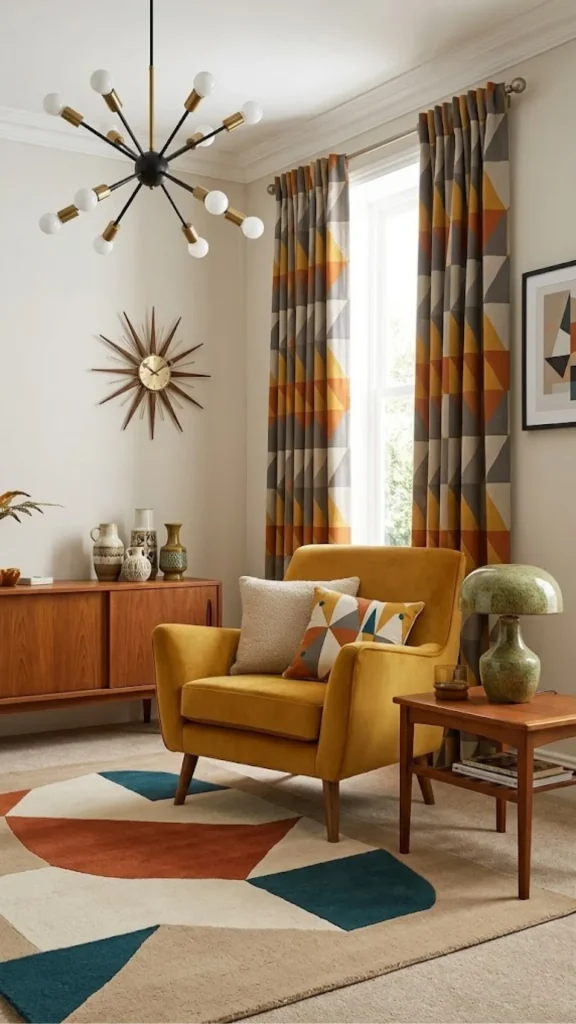
Almost everything else. Curtains, throw pillows, rugs, and smaller accessories don’t need to be “authentic” anything; they need to support the color palette and general shape language of the style. A budget rug in the right warm-neutral-plus-accent palette does as much for the room as an expensive one in the wrong colors.
Lighting is another place to get creative on a budget. The distinctive starburst or globe pendant lights that define the era are everywhere in budget reproduction form, and most people genuinely can’t tell the difference from across a room.
The Secondhand Advantage

This is one of the few decor styles where shopping secondhand isn’t a compromise; it’s often the better move. Estate sales, Facebook Marketplace, and thrift stores regularly turn up real mid-century pieces, sometimes underpriced because the seller doesn’t know what they have. Look for tapered, splayed legs, warm wood tones, and hardware that’s simple rather than ornate. A quick wipe-down and maybe a fresh coat of tung oil on tired wood can make a $40 thrift find look like it belongs in a design magazine.
The One Mistake That Breaks the Look

Mixing in too many ornate or heavily distressed pieces. Mid-century modern reads as clean and intentional, one overly fussy, carved, or shabby-chic piece in the mix and the whole room starts to look like “random furniture” instead of a cohesive style. If you’re building the look piece by piece over time, keep a mental (or actual) checklist of the silhouette you’re going for, so each new addition reinforces it instead of fighting it.
The Bottom Line
You’re not buying an era. You’re buying a handful of consistent design choices, clean lines, warm wood, a couple of bold accent colors, and furniture that earns its shape. Once you see the pattern, it gets a lot easier to spot the right pieces at a thrift store instead of paying retail for the same look.
For more Dining Room inspiration, read our full guide on Dining Room Table and Chairs with Casters: Are They Actually Worth It for Renters?