

Every time I rearrange my apartment, which, in a rental this size, is more often than I’d like to admit, I end up dragging dining chairs across the floor to make room for something else. That’s the moment caster chairs start looking less like a style choice and more like a genuinely practical one.
If you’re weighing whether to add casters to your dining setup, here’s the honest version: when they help, when they don’t, and what nobody mentions about living with them day to day.
What Caster Chairs Actually Solve

The appeal isn’t really about looks, most caster dining chairs are designed to look like normal dining chairs, with the wheels tucked under the legs. What they solve is movement. A chair on casters slides, swivels, and tilts instead of needing to be picked up and carried. In a small rental where the dining table doubles as a desk, a kids’ homework spot, or overflow seating when people come over, that matters more than it sounds like it should.
They’re also genuinely easier on your back and your floors during the small daily stuff,sliding in and out of your seat, turning to grab something off the counter, and scooting closer to the table without the screech of chair legs on hardwood.
Where They Make the Most Sense

- Multi-purpose dining spaces. If your “dining room” is also your home office, your craft table, or your kid’s homework zone, casters let you reposition chairs without the usual furniture-wrestling.
- Open-concept or studio layouts. Renters dealing with one big shared space benefit from furniture that can be repositioned in seconds rather than rearranged like a puzzle.
- Smaller rooms where chairs get bumped a lot. Swivel-tilt casters let you push back from the table without knocking into the wall or another chair behind you.
Where They’re Probably Not Worth It
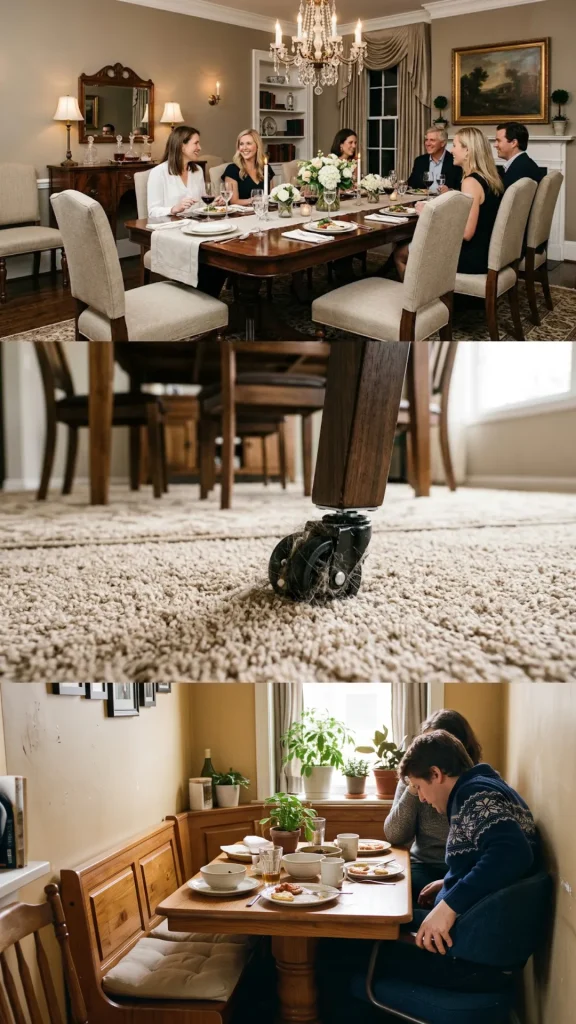
- Carpeted dining areas. Casters are built for hard flooring. On carpet, they either don’t roll well or start collecting fuzz and debris in the wheel housing — a maintenance headache, not a convenience.
- Tight dining nooks. If your chairs are already wedged in with barely any room to push back, the swivel motion of caster chairs can work against you instead of for you.
- If you’re trying to keep the room visually quiet. Caster bases read as slightly more “office chair” than traditional dining chair legs, even in nice finishes. If you want a classic, formal dining look, this might not be the move.
The Renter-Specific Stuff Nobody Mentions

Floor protection matters more here than it does for homeowners. If you’re on hardwood, vinyl plank, or any flooring you’re responsible for keeping scratch-free for your deposit, look specifically for soft rubber or polyurethane caster wheels — not hard plastic. Hard plastic casters can scuff or dent softer flooring over time, especially with repeated use.
Check your lease for furniture-related flooring clauses. Some leases mention rolling furniture specifically because of the floor-damage risk. It’s worth a quick read before you commit to a caster set.
A rug under the table doesn’t always help. It seems like the obvious fix for floor protection, but caster wheels can drag and bunch up a rug’s edge over time, especially on lower-pile rugs. If you do put a rug down, choose a flat, tightly woven one and check it periodically.
Weight capacity varies more than you’d expect. Caster chairs are rated for weight just like any chair, but the wheel mechanism adds another point of wear. If the set will see heavy daily use, it’s worth checking the actual weight rating rather than assuming all caster chairs perform the same.
The Bottom Line
Caster dining chairs aren’t a style trend — they’re a functional choice that solves a specific renter problem: needing furniture that moves easily in a space that has to do more than one job. If that’s your situation, they’re worth it. If your dining area is carpeted, tight, or purely decorative, you’re probably better off with a traditional set.
For more bedroom inspiration, read our full guide on How to Stop a Squeaky Bed: 9 Real Fixes That Actually Work